
Why Two Identical‑Looking Boards Can Be Completely Different
The ESP32‑C3 has quickly become one of the most popular microcontrollers for DIY electronics, IoT projects, and low‑power wireless applications. It is small, efficient, inexpensive, and fully compatible with Wi‑Fi and Bluetooth. Naturally, the market is full of tiny ESP32‑C3 development boards—especially on AliExpress—sold at unbelievably low prices.
But there is a catch.
Two boards that look absolutely identical on the outside can behave very differently once you try to flash firmware onto them. One will work perfectly. The other will be practically useless. And unless you know exactly what to look for, you have no chance of spotting the difference before buying.
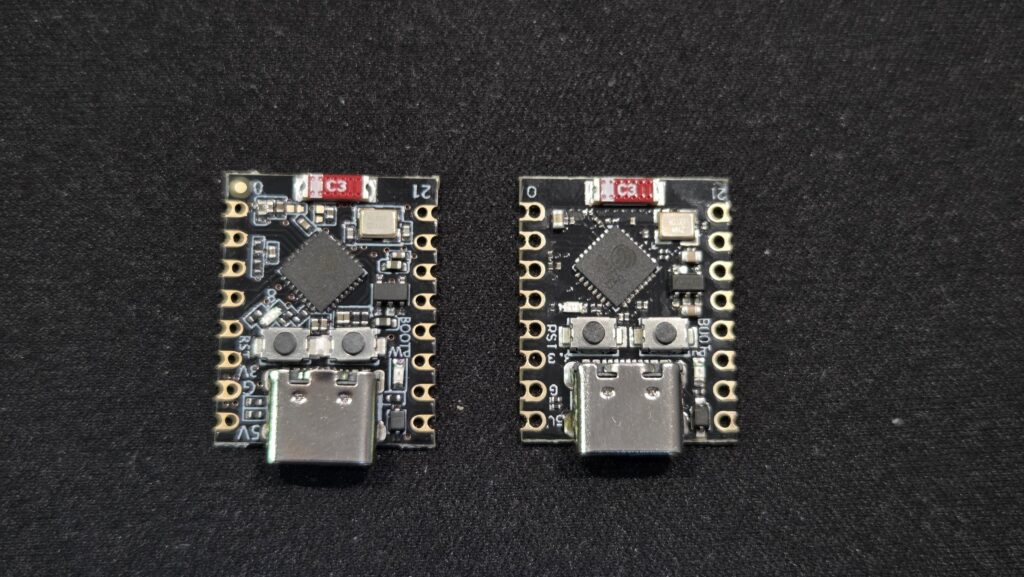
This article explains why this happens, how to identify the correct ESP32‑C3 variants, and how to avoid wasting money on boards that cannot run your code.
If TL;DR, here is a video version of this article
Why ESP32‑C3 Boards Can Be So Cheap
The ESP32‑C3 family comes in several variants. Some include built‑in flash memory, while others include none at all. Flash memory is where your firmware lives. No flash means no program storage, which means the chip cannot run your code.
Removing flash makes manufacturing cheaper. And because the flash‑less versions look identical to the fully featured ones, many sellers use them to offer extremely low prices.
From the outside, the boards look the same:
- Same form factor
- Same component placement
- Same silkscreen
- Same ESP32‑C3 package
But internally, they are not the same at all.
The Five ESP32‑C3 Variants
Espressif currently produces the ESP32‑C3 in five main versions:
- ESP32‑C3 (no suffix)
- ESP32‑C3FN4
- ESP32‑C3FH4
- ESP32‑C3FH4AZ
- ESP32‑C3FH4X
The critical detail is the letter F.
F stands for Flash.
If the chip name does not include an F, it does not include flash memory.
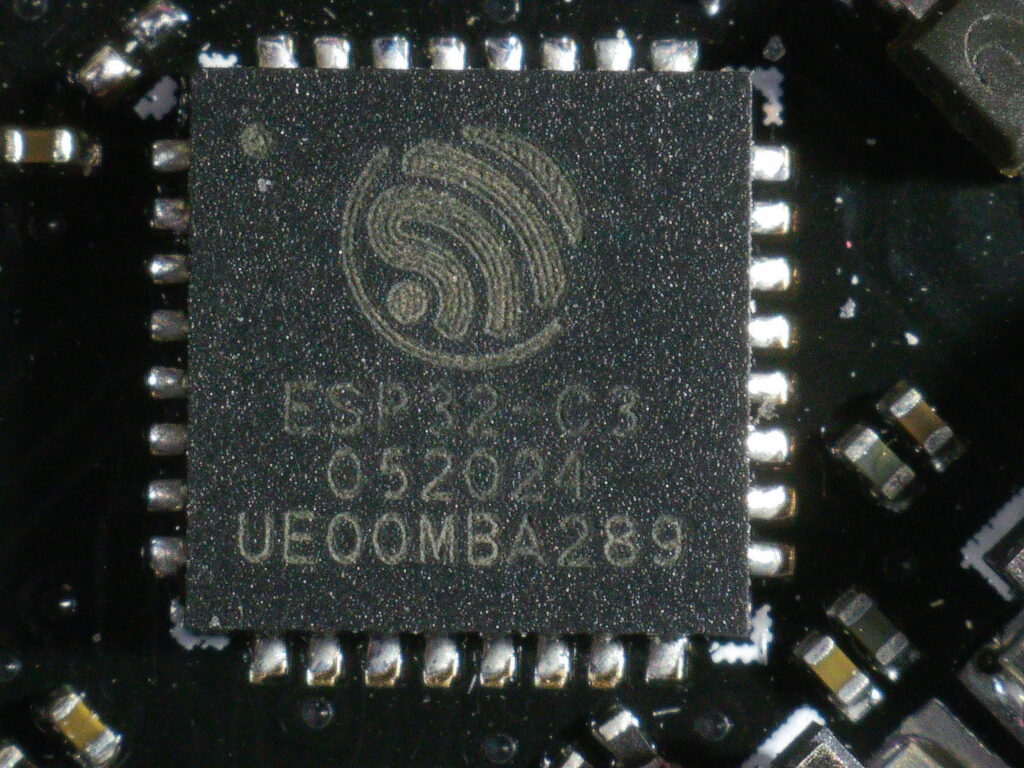
ESP32-C3 Without Flash
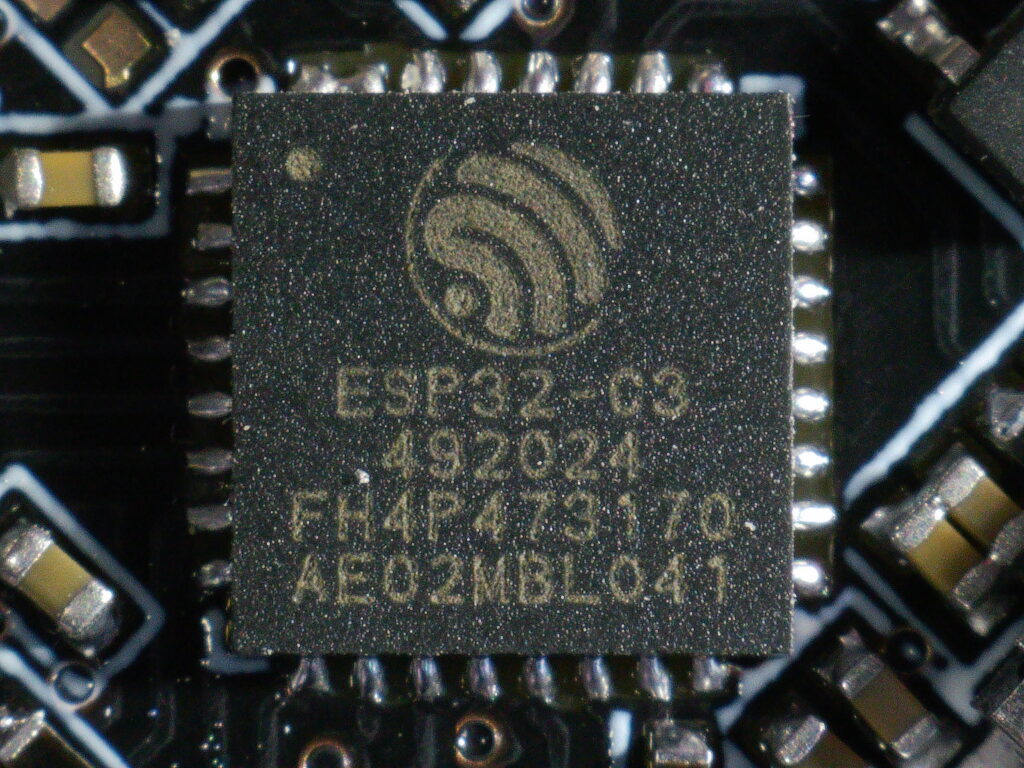
ESP32-C3FH4 With Flash
Good versions (with flash):
- FN4
- FH4
- FH4AZ
- FH4X
Bad version (no flash):
- ESP32‑C3 (plain, no suffix)
The problem is that many sellers blur or obscure the chip markings in their product photos. Some do it intentionally. Some do it to reuse generic images. Either way, you cannot rely on the photos alone.

ESP32-C3 Super Mini with blurred markings
Why the Flash‑less Version Is Basically Useless
Technically, you can connect external SPI flash to the flash‑less ESP32‑C3. But that means:
- Buying additional components
- Soldering tiny wires
- Modifying your board
- Creating a Frankenstein‑style setup
All of this defeats the purpose of buying a cheap, ready‑to‑use development board.
If you paid three dollars for a complete ESP32‑C3 board, you expect it to work out of the box. And it should.
How Sellers Hide the Truth
On many AliExpress listings, you will see:
- Blurred MCU markings
- Low‑resolution photos
- Cropped images hiding the chip
- Descriptions that contradict the photos
- Claims like “4M flash” without showing the actual chip
If the seller hides the markings, assume the worst.
If the listing looks suspiciously cheap, assume the worst.
If the description is vague, assume the worst.
There are plenty of honest sellers—but also plenty who rely on buyers not knowing the difference.
How to Protect Yourself Before Buying
Here are the practical steps to avoid getting the wrong ESP32‑C3:
1. Read the listing carefully
Look for explicit text such as:
- “ESP32‑C3FN4”
- “ESP32‑C3FH4”
- “4M flash”
If the listing does not specify the variant, skip it.
2. Inspect the photos
If the MCU text is blurred or unreadable, walk away.
A seller who hides the chip markings is not doing it by accident.
3. Compare prices
If one listing is significantly cheaper than all others, there is usually a reason.
4. Check reviews
Look for photos from buyers showing the actual chip markings.
5. Buy from reputable stores
Some AliExpress stores consistently ship correct hardware. Others do not.
Summary
The ESP32‑C3 is a fantastic microcontroller, and the Super Mini boards are incredibly useful—when they include flash memory. Unfortunately, many listings ship the flash‑less version, which is almost impossible to identify without reading the chip markings directly.
To avoid wasting money:
- Always choose FN4, FH4, FH4AZ, or FH4X
- Avoid the plain ESP32‑C3
- Do not trust blurred photos
- Stick to sellers who clearly show the MCU markings
A little caution goes a long way when buying ultra‑cheap development boards online.