A maker known as Twotoz has built a receiver for analog drone video around an ESP32-C5, putting the chip’s recently revealed software-defined radio abilities to work.
Following the disclosure that ESP32 microcontrollers have a hidden software-defined radio (SDR) capability, the first projects built on that finding are starting to appear. Twotoz has made one of them: a receiver that picks up and demodulates analog FM video using an ESP32-C5.
Analog video may seem like old technology, since broadcast television moved to digital more than ten years ago and home equipment has long relied on HDMI. In the drone world, though, it is still widely used, typically as a 5 GHz FM transmission. Its appeal is that the picture does not suddenly vanish the way a digital link can when radio conditions are poor, and it also offers very low latency.
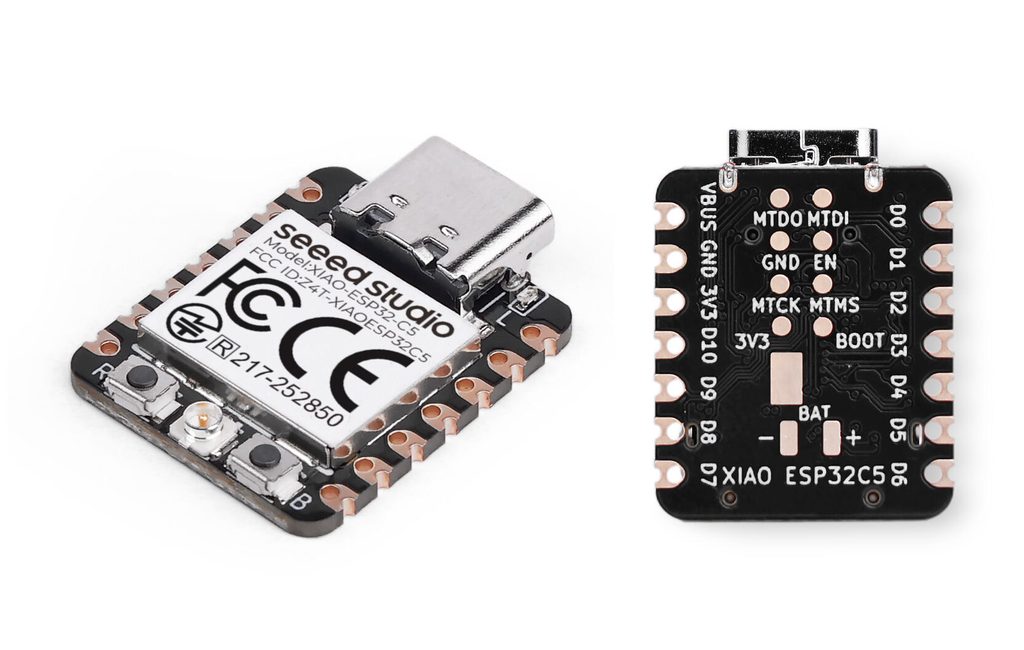
The build uses a Seeed Studio Xiao ESP32-C5 board. A simple resistor-ladder DAC turns the demodulated signal into a video output. Users can change channels with a basic button interface, while a serial connection gives access to more detailed settings.
The Hackaday writers welcomed the project, noting that it works at 5 GHz and so shows the hidden SDR feature is usable on these chips as well. They also wondered whether the latency introduced by the SDR approach would affect how practical the receiver is for flying. They added that this is not the first time an SDR has been used to handle video.
Source: Hackaday