Tabernetes Turns Browser Tabs Into Kubernetes Nodes
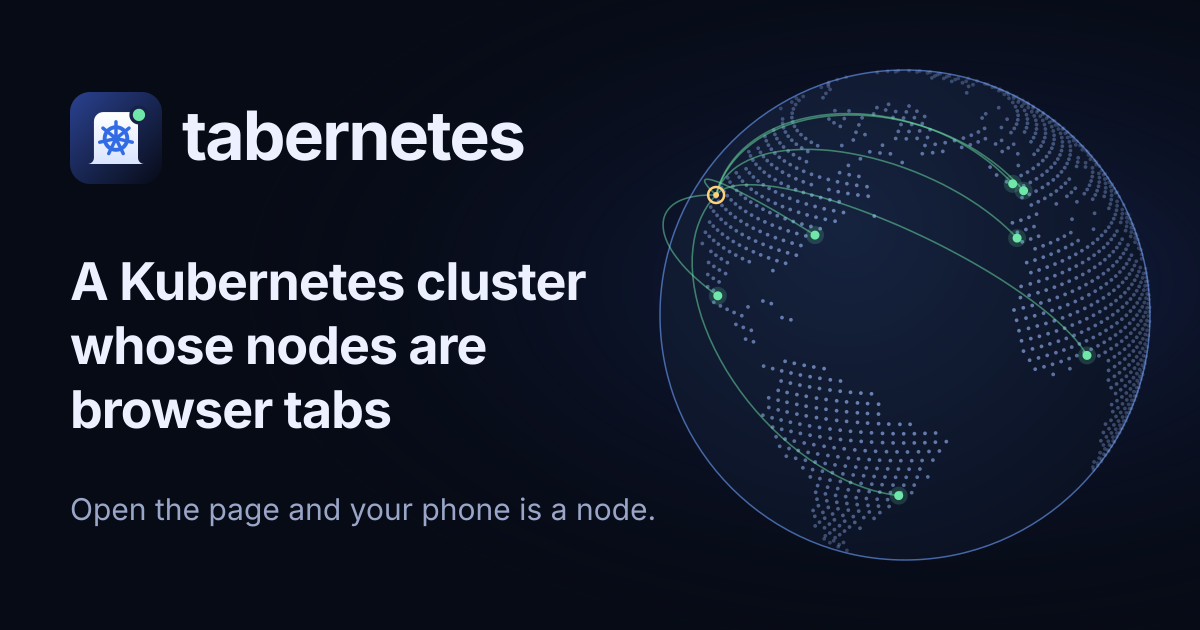
Tabernetes is an experimental Kubernetes cluster in which each node is a web browser tab running a small Linux kernel. Its nodes join and leave as visitors open and close pages.
Source: tabernetes
Tabernetes runs a Kubernetes cluster where the worker nodes are browser tabs. When someone opens the project's page on a phone or computer, that device joins the cluster as a node. The scheduler can then assign it a pod, and the pod's program runs inside a Linux kernel that boots within the tab. When the tab closes, the node disappears and Kubernetes places the pod on another available node.
Joining downloads roughly 5 MB and starts a small Linux guest that uses one CPU core for as long as the tab stays open. The control plane is a standard Kubernetes installation, and pods are ordinary pods. The one addition is a runtime class named tab, which tells the scheduler to place a pod on a browser node. Other pods keep running on the cluster's own machine. The agent that starts containers in tabs is called tabc, and it uses a kernel compiled to WebAssembly. Pod files and network addresses stay on the cluster's machine.
The project's demonstrations include a Mandelbrot set rendered across 64 tiles, with each node's pod computing its share using awk. The page also shows boot times and request latency, and lets visitors send requests to a Service whose pods answer from browser tabs and record visits in a Redis instance running elsewhere in the cluster.